
Epsom Derby Specials and Novelty Bets: Markets Beyond the Outright Winner
 Available in US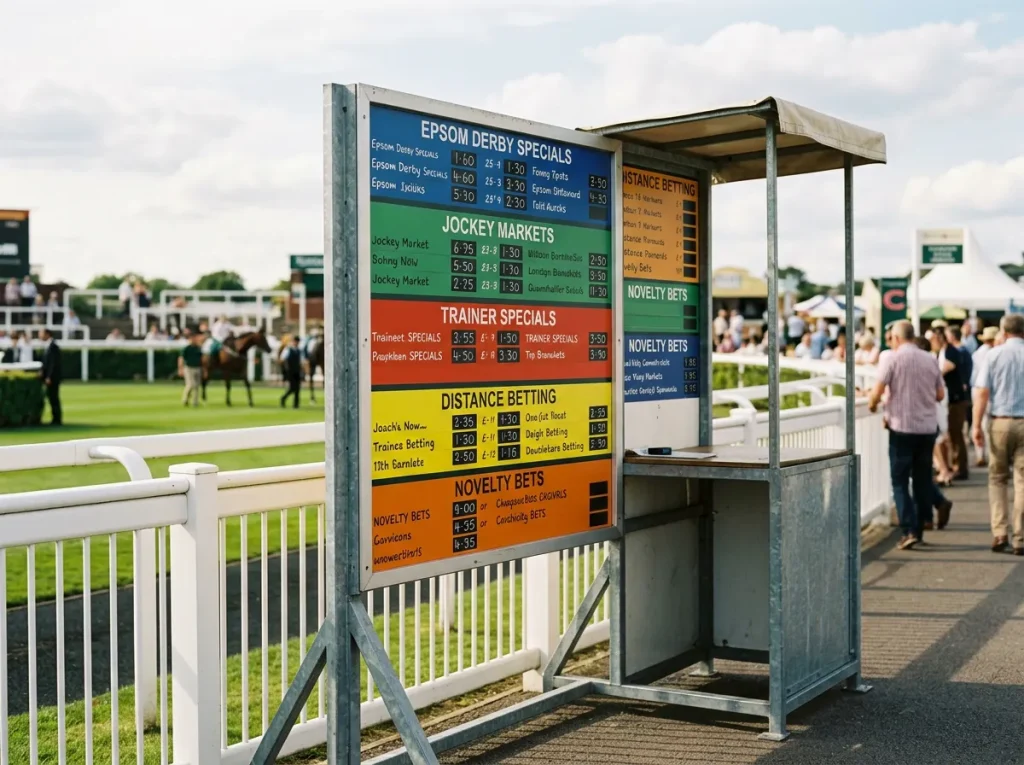
Most Derby punters never look beyond the win and each-way markets. That is understandable – the outright winner is the headline, and most of the pre-race analysis is built around identifying which horse will cross the line first. But bookmakers offer a range of specials and novelty markets on the Derby that can provide genuine value, particularly for punters who have a view on how the race will unfold rather than just who will win it.
I have bet on Derby specials every year for the past seven, and while they will never replace the core bet, they have produced some of my most satisfying – and profitable – Derby day results. The trick is knowing which specials are priced with care and which are priced to attract casual money.
See also: epsom derby betting and try fun novelty bet markets.
Winning Distance Markets: What the Historical Data Suggests
Winning distance markets let you bet on whether the Derby will be won by a narrow margin (under one length), a comfortable margin (one to three lengths), or a decisive margin (over three lengths). The pricing reflects historical averages, but the Derby’s results show more variation than the market typically accounts for.
Lambourn won the 2025 Derby by three and three-quarter lengths, leading from start to finish. That emphatic margin was the largest in several years and reflected a front-running performance where the field could not close the gap. In contrast, several recent Derbys have been decided by a head or a neck, with the first three or four separated by less than two lengths. The winning distance is heavily influenced by race tactics: a prominent or front-running winner tends to produce wider margins, while a hold-up race decided in the final furlong tends to produce tight finishes.
My approach is to assess the likely tactical shape of the race. If there are two or three confirmed front-runners in the field, the pace should be strong, and closers are more likely to make late headway – producing a tighter finish. If there is only one natural leader, a slower pace is likely, and that leader may extend the field into the straight – producing a wider margin. The tactical analysis that goes into picking the outright winner can be repurposed for the winning distance market at no additional research cost.
Trainer Nationality and Country-of-Origin Specials
The trainer nationality market asks whether the winner will be trained in Britain, Ireland, or elsewhere. Aidan O’Brien’s 11 Derby wins make this a market heavily skewed towards Ireland in recent years, and the pricing reflects that dominance. An Irish-trained winner is typically odds-on or near it, while a British-trained winner trades at a bigger price despite Britain supplying the majority of the field.
The value question is whether the Irish dominance is overpriced or underpriced. O’Brien’s hat-trick from 2023 to 2025 compressed the price on Irish-trained winners further than at any point in the market’s history. But even O’Brien does not win every year, and in 2021 and 2022 the winners – Adayar and Desert Crown – were both British-trained. Two wins from three years is a decent strike rate for the opposition, and if the British-trained price has drifted to 2/1 or beyond, there may be each-way value in opposing Ballydoyle’s monopoly.
French-trained raiders have targeted the Derby intermittently, with mixed results. A French entry in the 2026 field would offer an outsider’s price in the nationality market that might appeal as a small speculative stake, particularly if the horse has a running style that suits Epsom’s demands.
Top Jockey, First Past the Post and Other Rider Markets
Jockey specials – which rider will be aboard the winner, or which jockey will have the best aggregate result across the Derby card – are priced off the outright horse market but can diverge in interesting ways. A jockey with two rides on the card, one in the Derby and one in a supporting race, has two chances to contribute to a “top jockey” market but may have only one realistic winning opportunity.
The “first past the post” market is a subtly different proposition from the outright winner market. If there is a stewards’ enquiry that reverses the finishing order, “first past the post” bets are settled on the horse that physically crossed the line first, regardless of the official result. This is a rare edge case, but in a high-profile race like the Derby where interference on the turn or in the straight can trigger enquiries, the distinction has practical consequences.
I treat jockey and rider specials as secondary markets – useful for adding interest to Derby day but not where I concentrate serious money. The exception is when a jockey booking signals inside confidence that the outright market has not fully reflected. If a top jockey switches to a mid-priced contender and the jockey specials market has not adjusted as quickly as the outright odds, there can be a brief window of value.
Enhanced Odds Specials: How to Spot Real Value vs Marketing
Enhanced odds specials – “Get 30/1 on Horse X to win the Derby, was 6/1” – are among the most heavily promoted Derby offers. The headline price looks extraordinary, but the reality is more measured. These offers typically cap the enhanced payout at a small stake – five or ten pounds – with any amount above the cap settled at the original price. They are marketing tools designed to attract new sign-ups, not genuine pricing improvements for serious bets.
See also: Epsom Derby Match Bets with relevant background information.
The 2026 Derby’s two-million-pound prize fund will attract more promotional activity than usual, and the enhanced odds offers will be prominent across every major operator. The question to ask with any enhanced price is: what would the original odds need to be for this to represent genuine value? If the horse is 6/1 without enhancement and you believe the true price should be 5/1 or shorter, the enhancement is a bonus on top of an already reasonable bet. If you are taking the enhancement on a horse you would not otherwise back, the bookmaker has done its marketing job and you are placing a bet without analytical conviction.
My filter is simple: would I back this horse at the original, non-enhanced price? If yes, the enhancement is a welcome addition. If no, I move on. For a systematic approach to evaluating whether any Derby price represents genuine value, the each-way betting guide covers the implied probability calculations that underpin every informed wager.
