
Derby and Coronation Cup Double: Building a Saturday Accumulator at Epsom
 Available in US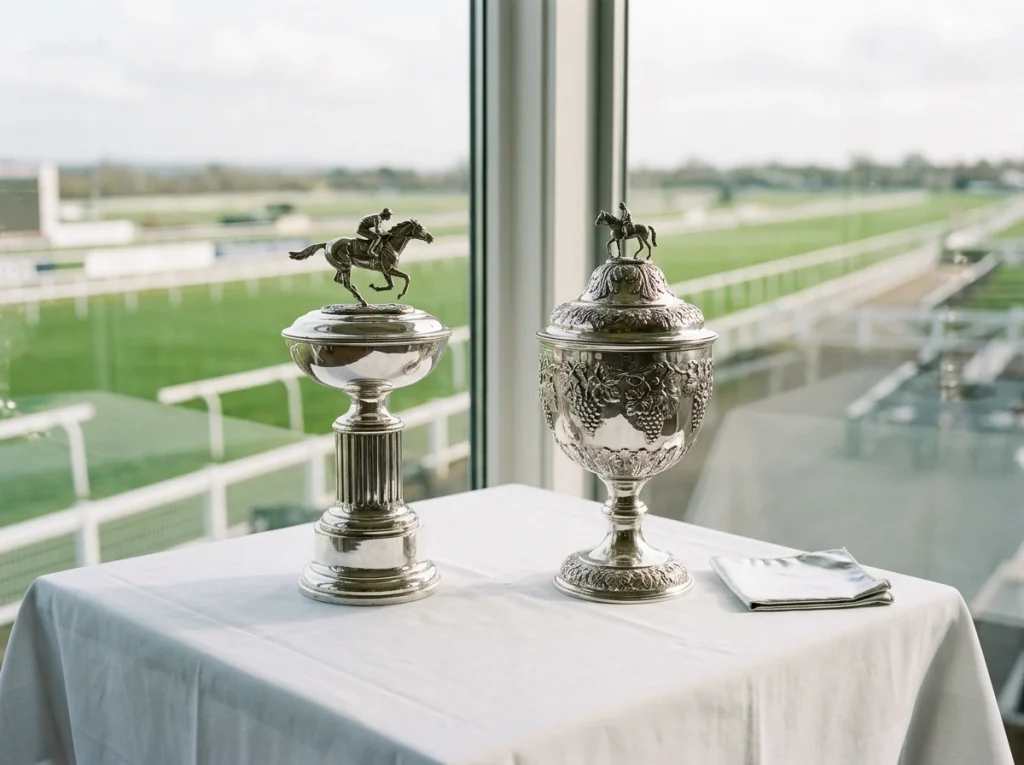
For the first time in years, Derby Saturday 2026 features two Group 1 races with seven-figure prize funds on the same card. The Coronation Cup has been moved from its traditional slot to the Saturday programme and backed by Coolmore sponsorship with a purse of one million pounds, joining the two-million-pound Derby as the day’s co-headliner. That creates a double-betting opportunity that did not exist in previous years, and the maths of combining two Group 1 selections into a single wager deserves a proper look.
See also: epsom derby betting for multi-race accumulator ideas.
The Coronation Cup’s New Saturday Slot and £1 Million Upgrade
The Coronation Cup is a Group 1 for older horses – aged four and above – run over the same one mile and four furlongs as the Derby but with a fundamentally different competitive profile. Where the Derby is restricted to three-year-olds with limited racing experience, the Coronation Cup features hardened Group-level performers who have already proven their ability over the trip. The form is more established, the fields are typically smaller (six to ten runners), and the market tends to be tighter.
The Jockey Club invested six million pounds in the broader DerbyFest revamp, and the Coronation Cup’s relocation and prize-money upgrade from 450,000 to one million pounds is a central piece of that strategy. The aim is to create a Saturday card with enough quality to justify the ambitious attendance target of around 40,000 spectators across paid enclosures and the Hill.
From a punting perspective, the move is significant because it places a race with known, exposed form alongside a race defined by the unknown. The Coronation Cup field features horses whose ratings, preferences, and quirks are well documented after multiple seasons of racing. The Derby field features lightly raced three-year-olds with limited form and enormous scope for improvement or regression. Combining the two into a double means pairing a higher-confidence selection with a lower-confidence one – a dynamic that has direct implications for whether the double structure offers genuine value.
The Maths of a Group 1 Double: How Combined Odds Work
A double multiplies the decimal odds of both selections to produce the combined return. If your Coronation Cup selection is 3/1 (4.0 decimal) and your Derby selection is 8/1 (9.0 decimal), the double pays 35/1 (36.0 decimal). A ten-pound stake returns 360 pounds if both win. Placed as two singles on the same selections, a ten-pound win on the Coronation Cup at 3/1 returns 40 pounds, and a separate ten-pound win on the Derby at 8/1 returns 90 pounds – a combined 130 pounds. The double’s potential return is nearly three times higher, but it requires both legs to win.
The fundamental question with any double is whether the increased potential return compensates for the reduced probability of success. Two independent events with win probabilities of 25% and 11% respectively (roughly 3/1 and 8/1) have a combined probability of around 2.75%. The double odds of 35/1 imply a probability of about 2.7%. In this hypothetical, the double is priced fairly – neither generous nor mean. In practice, the bookmaker’s margin on each leg compounds in the double, which means doubles are almost always slightly worse value than the equivalent singles.
The exception is when one or both legs are genuine overlays – horses whose true chance of winning exceeds their market-implied probability. If your Coronation Cup pick is 3/1 but you assess its true probability at 30%, and your Derby pick is 8/1 but you assess its probability at 15%, the combined true probability is 4.5% against double odds implying 2.7%. In that scenario, the double offers real edge. But you need to be right about both assessments, which demands a level of confidence that the Derby, with its 30% favourite strike rate, rarely justifies.
Two Races, Two Profiles: Why Contender Types Differ
The Coronation Cup rewards proven stamina and consistency. These are older horses who have been racing for two or three seasons, whose preferences are well known, and whose ability over the Derby course and distance has often been tested at previous Epsom fixtures. A Coronation Cup contender with previous course form at Epsom carries a concrete advantage that no Derby runner can match, since none of the last 12 Derby winners had raced at Epsom before their Classic victory.
The Derby rewards potential, adaptability, and the ability to handle the unknown. Its winners are often horses taking a significant step up in class, distance, or both, and their form profiles are defined by upward trajectories rather than established patterns. The analytical approach for the Coronation Cup is backward-looking: what has this horse done? The approach for the Derby is forward-looking: what might this horse become?
Combining the two in a double means accepting that your confidence levels in each leg are different. The Coronation Cup leg should feel like a considered, evidence-based assessment. The Derby leg should feel like an informed gamble. If both legs feel the same – either both confident or both speculative – the double structure is probably not the right vehicle for your opinion.
When a Double Pays and When Singles Are Sharper
Doubles pay when you have strong views on both races and the combined odds exceed what you would achieve with proportional singles. They make particular sense when your Coronation Cup selection is a short-priced favourite – say 6/4 or 2/1 – where the singles return is modest, and your Derby selection is a bigger price where the double lifts the combined payout into territory that justifies the additional risk.
See also: Oaks vs Derby Betting with relevant background information.
Singles are sharper when your confidence is asymmetric – strong on one race, weaker on the other. If you are confident about the Coronation Cup but uncertain about the Derby, staking on the Coronation Cup as a single and treating the Derby separately (perhaps each-way rather than win-only) gives you a better risk-adjusted outcome than yoking the two together. A winning Coronation Cup single at 2/1 puts 30 pounds into your pocket from a 10-pound stake, which you can then redeploy on the Derby. A losing Derby leg in a double wipes out the Coronation Cup winner entirely.
My own approach for 2026 is to assess the two races independently, set my staking for each on its own merits, and only combine them into a double if both selections meet my full checklist of value criteria. If one does and the other does not, singles keep the positive expectation intact. The double is a luxury for days when both cards align, not a default approach. For a wider view of how to structure your staking across the full Saturday programme, the race day guide covers the complete card from first race to last.
