
Tattenham Corner and the Epsom Camber: Why the Track Shapes Every Derby Bet
 Available in US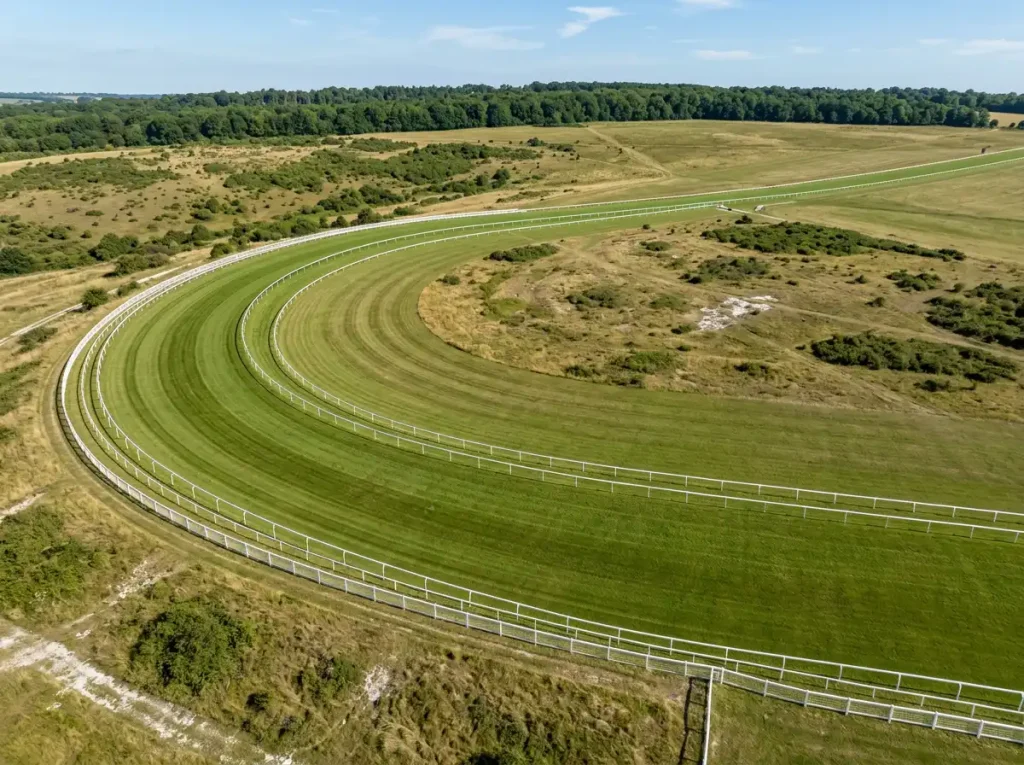
Stand at the rail on Tattenham Corner during the Derby and you feel the race change. Horses that were travelling easily on the far side of the course suddenly have to negotiate a sharp downhill left-hand turn on cambered ground, and the ones that cannot handle it lose their action, lose their position, and lose the race in a matter of strides. I have watched more than a few well-backed favourites come around that bend unbalanced, their jockeys already knowing the game was up two furlongs from home.
No other top-level racecourse in Europe asks this of its runners. Tattenham Corner is what makes the Derby a genuine test of athletic versatility rather than a simple trial of speed and stamina, and any bet placed without considering its influence is incomplete.
See also: epsom derby betting and learn about Tattenham Corner.
Uphill, Downhill and a Sharp Left: The Epsom Course Profile
The Derby is run over one mile and four furlongs – roughly 2,400 metres – on a horseshoe-shaped course that begins with a long uphill climb, crests around the half-mile marker, and then plunges downhill towards Tattenham Corner before a short, rising straight to the finish. The total height differential is roughly 40 metres, which is significant for flat racing.
Runners break from the stalls near the one-mile start and climb steadily for the first four furlongs. This uphill section sets the tempo. If the pace is too fast here, horses burn energy on the incline and have nothing left for the closing stages. If it is too slow, the field bunches up and the race becomes a sprint from the three-furlong pole, which favours closers at the expense of horses who need to be prominent.
The descent from the high point to Tattenham Corner covers roughly three furlongs and drops sharply. Horses are running downhill at near-full racing speed while simultaneously shifting their balance for the left-hand bend. The camber – the inward slope of the track surface on the bend – pushes horses towards the rail, and any runner that is not naturally balanced on left-handed turns will be fighting the track rather than flowing with it. That fight costs energy, length, and composure.
What Happens at Tattenham Corner and Why It Catches Horses Out
The corner itself arrives roughly three furlongs from the finish, and what happens there often decides the result. Horses on the inside rail have the shortest distance to travel but face the steepest camber. Horses on the outside travel further but on more level ground. Jockeys must decide in a split second whether to save ground on the inner or sacrifice distance for balance on the outer – and that decision depends entirely on how their horse is handling the terrain.
None of the last 12 Derby winners had previous racing experience at Epsom before their Classic victory. That statistic seems counterintuitive – you would expect course experience to help on such a unique track – but it reflects a deeper truth. The horses that win the Derby are balanced, athletic animals whose natural movement allows them to handle Tattenham Corner instinctively. They do not need to have practised at Epsom because their physical qualities suit the demands without rehearsal. The average winning rating of 115 over the past decade confirms that raw class matters, but class alone is not enough. A 120-rated horse that cannot stay balanced on the camber will lose to a 112-rated horse that flows around the bend.
The going plays a role too. On softer ground, the camber effect is amplified because horses’ hooves sink deeper into the surface on the turn, creating more lateral force. On quick ground, the turn comes faster and horses have less time to adjust. Neither extreme is forgiving, which is part of what makes the Derby such a demanding test.
Front-Runners, Hold-Up Horses and the Ideal Race Position
Tactical positioning into Tattenham Corner is one of the most debated topics in Derby analysis. Front-runners have the advantage of racing on their own terms, choosing their line through the bend without interference. Lambourn’s victory in 2025 was a textbook front-running display – he controlled the pace, took the shortest route around the corner, and kicked clear when others were still finding their balance.
But front-running is not the only route to success. Hold-up horses who sit in midfield can pick their way through the bend with cover, saving ground and energy before launching a challenge in the straight. The risk is traffic – getting boxed in on the rail or caught wide without racing room. A hold-up ride at Epsom requires a jockey with nerve and experience on the course, qualities that explain why certain riders – Ryan Moore, William Buick – have such strong Derby records.
The worst position is invariably wide and towards the rear. A horse that is six or seven lengths off the pace and racing three wide coming down the hill has to cover more ground on the turn, fight the camber from a wide berth, and then make up multiple lengths in a rising straight of less than four furlongs. It can be done – but it requires an exceptional horse, and most Derby fields contain at most one or two with that ability.
How Course Knowledge Translates into Sharper Derby Bets
Understanding Tattenham Corner does not tell you which horse will win the Derby, but it does help you eliminate the ones that will not. A horse with a pronounced left-hand tendency in its action – one that lugs left under pressure – will struggle on the right-handed camber. A big, long-striding horse that needs time to wind up may not handle the sudden change from downhill to flat at the bottom of the hill. A one-paced plodder that stays well on galloping tracks may find Epsom’s undulations too severe for its limited athletic range.
See also: Derby Going Ground Conditions for practical tips and examples.
When I assess Derby contenders each year, I run every horse through a three-question filter specific to the course: does it act on left-handed tracks? Has it shown balance and agility in previous races? Does its running style suit the demands of the bend and the short straight? Any horse that fails two of those three questions gets crossed off, regardless of its rating or reputation. The broader statistical trends provide additional filters, but the Tattenham Corner test is where I start.
