
Epsom Derby History: From 1780 to the Modern Blue Riband
 Available in US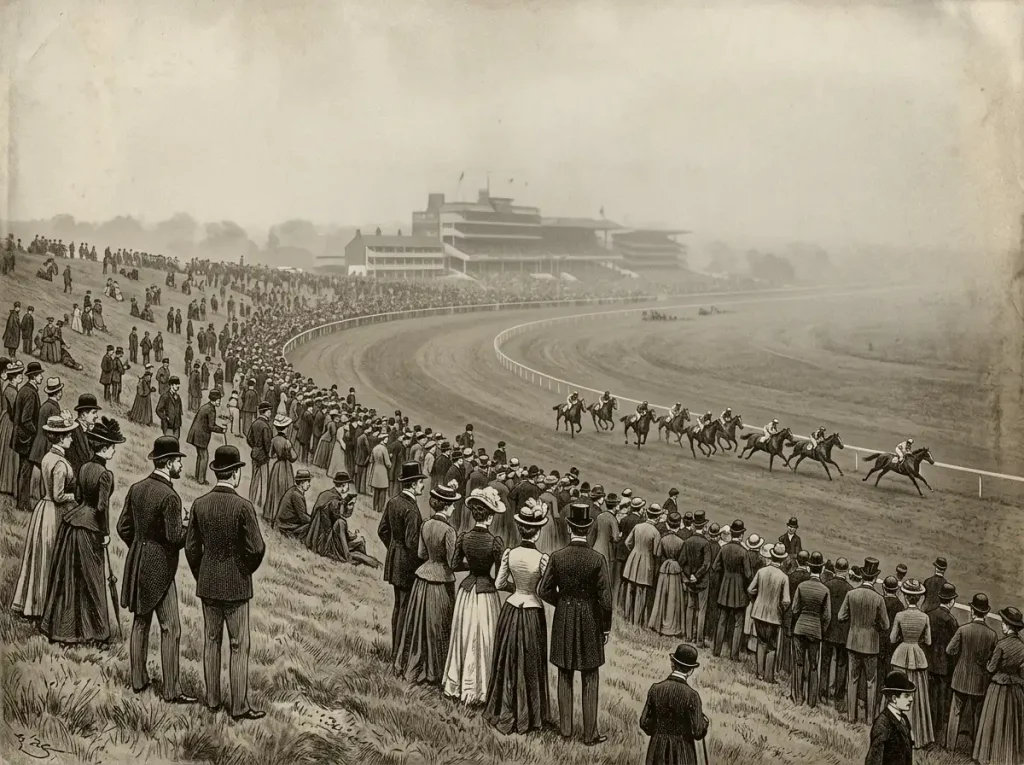
The Epsom Derby has been run every year since 1780, interrupted only by two world wars. That continuity makes it one of the oldest sporting events on the planet – older than the modern Olympics, older than any football league, older than horse racing as most of the world knows it. For a punter in 2026 placing a bet on a three-year-old Classic, understanding how the race reached this point is not sentimentality. It is context that explains why the Derby demands what it does and why certain types of horse keep winning it.
See also: epsom derby betting for the full history of the race.
The Coin Toss, the Earl and the First Running in 1780
The story every racing fan knows – and that every non-racing fan finds charming – is that the Derby was named on the flip of a coin. The 12th Earl of Derby and Sir Charles Bunbury were dining together at the Earl’s estate, The Oaks, in 1778 when they agreed to found a new race for three-year-old fillies over a mile and a half at Epsom. That race, named The Oaks after the house, ran for the first time in 1779. Its success prompted a companion race for colts and fillies the following year, and the naming rights came down to a coin toss between Derby and Bunbury. Derby won the toss. Bunbury won the race – his colt Diomed took the first running in 1780.
Had the coin landed differently, we would be talking about the Bunbury Stakes, and “derby” would be nothing more than a town in the East Midlands. Instead, the word entered the language as a synonym for the definitive contest in any field. The Kentucky Derby, the Demolition Derby, political horse-race metaphors – all trace back to that after-dinner coin toss on the Surrey Downs.
The original race was run over a mile. By 1784, the distance had been extended to one mile and four furlongs, the trip it has retained ever since. That extension was crucial: it turned the Derby from a speed test into a stamina and class examination, which is why the race remains relevant to the thoroughbred breeding industry nearly 250 years later. The ability to stay a mile and a half at racing pace is the ultimate test of a young horse’s constitution.
Victorian Glory, Two World Wars and the Hill’s Golden Afternoons
The Derby became a national event during the Victorian era. Derby Day was an unofficial public holiday in London; Parliament adjourned, businesses closed, and tens of thousands of people made the journey to Epsom on foot, by train, and by carriage. The Hill – the free-access area above the course – was packed with fairground stalls, pickpockets, and punters of every social class. Charles Dickens wrote about it. William Powell Frith painted it. The Derby was not just a race; it was a social phenomenon.
Both world wars disrupted the fixture. The race was relocated to Newmarket between 1915 and 1918, and again between 1940 and 1945. Those wartime runnings lacked the spectacle and the crowds that defined the Epsom experience, but the race itself continued – a point of national pride and normality amid extraordinary circumstances.
The post-war decades brought a different kind of glory. Lester Piggott won his first Derby in 1954 aboard Never Say Die and went on to win eight more, establishing a jockey record that stood for decades. The Hill remained free and open, drawing enormous crowds through the 1970s and 1980s, though the character of Derby Day was slowly changing from a national carnival into a more exclusively sporting occasion.
Sponsorship, Saturday Moves and the Race’s Shifting Identity
The modern era of the Derby has been shaped by two forces: commercialisation and competition. The race attracted its first major sponsor in the 1980s, and title sponsorship has changed hands several times since. The current title partner, Betfred, reflects the intertwined relationship between the race and the betting industry – a relationship that predates formal sponsorship by at least 200 years.
The most controversial change came in 1995, when the Derby was moved from its traditional Wednesday slot to a Saturday. The intention was to maximise television audiences and betting turnover, and in purely commercial terms the move worked. But it ended a tradition that had defined the race’s identity, and some purists have never forgiven the decision.
Attendance tells a stark story. The 2001 Derby, Galileo’s year, drew more than 50,000 spectators. By 2025, the figure had dropped to 22,312 – the lowest of the 21st century. The Jockey Club’s DerbyFest initiative, backed by six million pounds of investment, aims to reverse that decline by reimagining the festival as a broader entertainment event rather than a purely racing occasion. Whether that works remains to be seen, but the numbers make it clear that something had to change.
What 245 Years of Derby Lore Tell the Modern Punter
History does not hand you a winner, but it does hand you perspective. The Derby has always been a race that confounds expectations. Favourites have been failing at Epsom since the 19th century, and the unique track has been catching out unbalanced horses since long before anyone coined the phrase “Tattenham Corner effect.” Aidan O’Brien’s 11 wins are remarkable, but they sit within a 245-year tradition that has consistently rewarded versatility, temperament, and stamina over raw speed.
See also: Epsom Derby Winners List to deepen your understanding.
The other lesson from history is that the Derby’s significance extends beyond prize money and prestige. It is the race that defines breeding values for the next generation. Derby winners become stallions whose progeny shape the sport for decades – Galileo being the most obvious modern example. That breeding incentive ensures that the best horses continue to target the race, which in turn ensures that the Derby maintains the field quality that makes it such a compelling betting event.
For punters, the practical takeaway is this: the Derby is not just another Group 1. Its history has created a race with unique demands – the course, the distance, the timing in a three-year-old’s career – that produce outcomes no other race quite matches. The patterns in the modern results, explored in detail in the trends and statistics guide, are not random noise. They are the statistical echo of 245 years of the same test being asked of each new generation of thoroughbreds.
