
Epsom Derby Draw Bias: Does Stall Position Matter Over a Mile and a Half?
 Available in US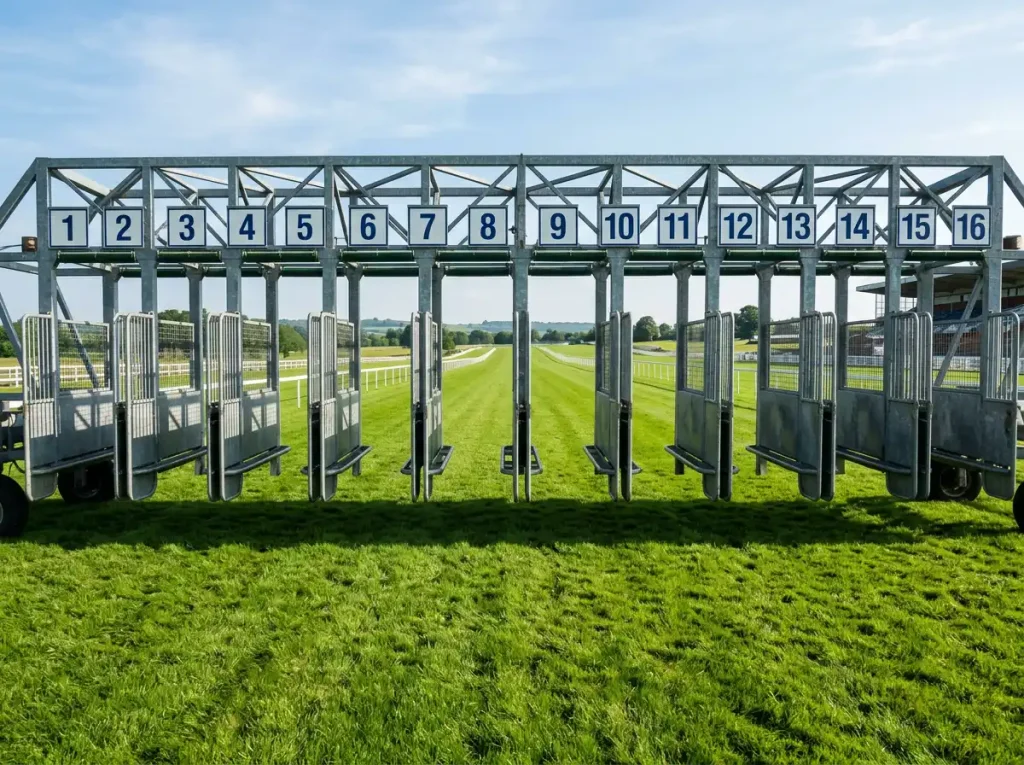
Every year after the Derby draw is announced, I watch social media fill up with confident claims about high draws, low draws, and the “golden stall” that apparently guarantees victory. Most of it is noise. The Derby is run over a mile and four furlongs on a horseshoe-shaped course, and the field covers nearly half a mile before the track even begins to curve. That distance is supposed to neutralise the draw. But does it?
I have tracked draw data for the Derby across two decades, and the honest answer is more nuanced than either the draw obsessives or the draw sceptics would like.
See also: epsom derby betting for draw bias data and analysis.
Why Draw Bias Exists on Flat Courses – and Why Epsom May Be Different
Draw bias is a proven phenomenon on sprint courses and tight, turning tracks where the field does not have time to settle before the first bend. On a five-furlong sprint at Chester, the low draw is a massive advantage because the first turn arrives within seconds of the start. The inside horse saves ground, maintains position, and races a shorter distance. The stats are unequivocal.
The Derby starts near the one-mile gate, and the field runs uphill in a broadly straight line for over four furlongs before the course begins to curve. That is roughly 800 metres of straight running – more than enough for every jockey in a 16-runner field to manoeuvre from their starting stall into their preferred racing position. In theory, the draw should be irrelevant by the time the field reaches any point where position matters.
But theory and practice sometimes diverge. The uphill gradient in the opening furlongs affects pace, and pace affects how quickly jockeys can reposition. In a slowly run Derby, where nobody wants to commit to the front, the field can remain bunched and wide for longer than expected, which means horses drawn wide stay wide. In a fast-run race, the field strings out quickly and the draw’s influence dissolves within the first two furlongs.
Twenty-Year Draw Data: Winners by Stall Position
Across the 25 Derby runnings from 2000 to 2025, winners have emerged from a wide spread of stall positions. There is no single stall or narrow range of stalls that dominates the results. Low draws, middle draws, and high draws have all produced winners, and the distribution does not show a statistically significant bias in any direction.
Aidan O’Brien’s 11 wins further complicate any draw analysis because his multiple entries occupy stalls across the full range. When a trainer has three, four, or five runners spread across the draw, the probability that at least one of them sits in a “favourable” position is high regardless of whether a true bias exists. Any draw trend you spot in the raw data must be checked against the possibility that it simply reflects the spread of the dominant trainer’s entries rather than a genuine positional advantage.
What the data does show is that extreme positions – the very lowest and very highest stalls – have produced winners at roughly the frequency you would expect from random distribution. Neither being drawn one nor being drawn 18 appears to carry a meaningful edge or disadvantage over the dataset. That is consistent with the course profile: the long uphill straight neutralises the draw before the terrain makes its demands.
How the Long Run to Tattenham Corner Reduces the Draw’s Influence
None of the last 12 Derby winners had previous racing experience at Epsom, which means the horses themselves have no learned behaviour about how to position from specific stalls on this course. The jockeys, however, know exactly what they are doing. Experienced Epsom riders use the long opening section to cross gradually from a wide draw to the rail, or to let the field settle before committing to a position. The skill of the rider is a far bigger determinant of race position at the top of the hill than the number on the starting stall.
The descent to Tattenham Corner covers roughly three furlongs, and by this point the field is typically racing in single file or in two loose groups. Whatever shape the draw imposed at the start has been erased by the terrain and by nearly a mile of racing. The corner itself demands balance and agility – qualities that have nothing to do with starting position and everything to do with the horse’s physical attributes and the jockey’s tactical intelligence.
This does not mean you should ignore the draw entirely. It means you should weight it very lightly in your analysis – far below factors like running style, fitness, going preference, and the horse’s temperament under the unique pressures of Epsom.
When the Draw Should and Should Not Change Your Derby Bet
There is one scenario where I let the draw influence my thinking. If a horse I fancy is a confirmed front-runner drawn very wide – say stall 16 or 17 in an 18-runner field – it will need to use energy crossing to the rail before it can establish its position on the lead. That additional early effort, on the uphill section, is a genuine negative. It does not kill the horse’s chances, but it makes the front-running plan harder to execute cleanly.
See also: Tattenham Corner Epsom with relevant background information.
Beyond that narrow scenario, the draw is background noise. The average winning rating of 115 tells you that class matters more than any positional nuance. A horse with the ability, the stamina, and the balance to win the Derby will overcome an unfavourable draw far more easily than a limited horse will overcome a favourable one. If the draw is the main argument in favour of backing a particular horse, you probably do not have a strong enough case to be betting on it at all.
For the factors that genuinely separate Derby winners from the rest – career experience, last-out form, trainer patterns, and rating thresholds – the trends and statistics analysis provides the full statistical picture that the draw alone cannot offer.
