
Epsom Derby Jockey Records: Rides, Wins and What Jockey Bookings Signal
 Available in US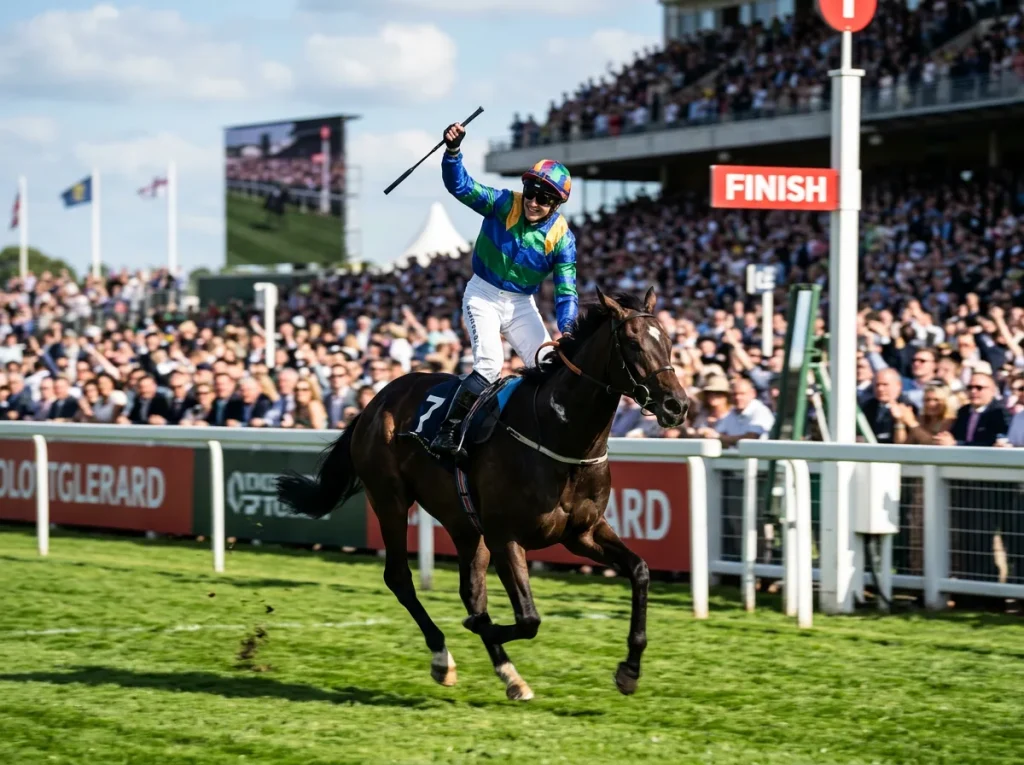
Wayne Lordan crossed the line first in the 2025 Derby and said something that stuck with me: “This is one of the greatest races. For any jockey that wants to start out, all they ever want to do is win the Derby.” That is not media polish. Every flat jockey in Britain and Ireland grows up dreaming of the Derby, and the ones who win it understand Epsom in a way that goes beyond technical ability. The track demands nerve, balance, and split-second tactical intelligence – qualities that separate the great Derby riders from the merely talented.
See also: epsom derby betting and review top jockey records.
Piggott, Moore and the Jockeys Who Defined the Derby
Lester Piggott won the Derby nine times between 1954 and 1983, a record that may never be broken. His style was unmistakable – quiet in the saddle, devastatingly efficient in a finish, and willing to commit to tactical decisions that terrified other riders. Piggott understood Tattenham Corner better than anyone of his era, and his ability to produce a horse at exactly the right moment down the Epsom hill was a skill honed over three decades of riding the course.
In the modern era, Ryan Moore has emerged as the dominant Derby jockey, winning multiple renewals primarily aboard Aidan O’Brien-trained runners. Moore’s strength is adaptability – he can ride a front-runner from gate to wire one year and deliver a hold-up challenge from the rear the next. His partnership with Ballydoyle gives him access to the strongest book of Derby rides in training, but it is his technical excellence at Epsom that converts opportunities into victories.
Frankie Dettori, despite being one of the most celebrated jockeys in racing history, won only one Derby – Authorized in 2007. The race eluded him for most of his career, a reminder that fame and general excellence are not the same as Epsom expertise. The Derby tests specific skills, and jockeys who excel at Ascot, Newmarket, or Longchamp do not automatically transfer that superiority to the Downs.
When a Jockey Change Before the Derby Is a Betting Signal
Jockey bookings for the Derby are confirmed in stages, with the final commitment coming at declaration time. But the manoeuvrings behind the scenes start weeks earlier, and a late jockey change is one of the strongest betting signals available to attentive punters.
Sixteen of the last 24 Derby winners won their most recent start before the Classic, and a jockey switch often reflects a trainer’s private assessment that a horse’s form is better than its public profile suggests. If a top jockey is released from a fancied ride to take a less obvious booking, it suggests the new connection’s trainer has communicated confidence that the public market has not yet priced in.
The reverse is equally informative. When a leading jockey abandons a horse he has ridden in trials to pick up a different mount, the implication is that the trials form has not translated into genuine Derby confidence behind closed doors. The market may take hours or days to react to a jockey switch, and that lag is where the value sits. A switched jockey is insider information made public – the question is whether you act on it before the price adjusts.
Active Jockeys with the Strongest Derby Credentials in 2026
Heading into 2026, the riders with proven Epsom records are Ryan Moore, William Buick, and Wayne Lordan. Moore’s multiple wins speak for themselves. Buick has won the Derby and the Oaks, demonstrating a command of the Epsom terrain that few contemporaries can match. Lordan’s 2025 victory aboard Lambourn at 13/2 – leading from the front and winning by three and three-quarter lengths – announced him as a jockey who rides the course with instinctive understanding.
Beyond the proven winners, watch for jockeys who ride the Epsom card regularly in the spring meetings. These riders – sometimes overshadowed by the headline names – accumulate course knowledge that pays dividends when the pressure of Derby day arrives. A jockey who has ridden 30 winners at Epsom across lesser fixtures understands the camber, the gradients, and the running rail in a way that a visiting rider, however talented, simply cannot replicate in one ride.
Retained Riders vs Freelancers: A Pattern Worth Noting
The Derby’s modern history shows a clear tilt towards retained riders – jockeys under contract to a specific stable, who ride that stable’s horses across the season. Moore as O’Brien’s number one is the obvious example, but the pattern extends beyond Ballydoyle. Retained riders know their horse’s quirks, have built a relationship through training gallops and trial runs, and can ride a pre-agreed tactical plan with more confidence than a jockey booked for a single afternoon.
See also: Aidan O’Brien Derby Record to deepen your understanding.
Freelance jockeys – riders without a retained contract who pick up spare rides – have won the Derby, but less frequently in recent decades. The exception tends to be a freelancer who has already ridden the horse in question, particularly in a key trial. If a freelancer won the Dante aboard a specific horse and keeps the ride for the Derby, that continuity carries real weight. If the same freelancer is picking up the ride for the first time on Derby morning, the lack of horse knowledge is a concern.
My hierarchy when assessing jockey bookings is straightforward: proven Epsom winner on a horse they know well is the top tier. Proven Epsom competence on a new ride is the second tier. Big-name jockey with limited Epsom experience is the third. This order does not override form and ability – a 120-rated horse will not lose because its jockey has never ridden the track – but when two horses are close on form, the jockey with Epsom nous gets my stake. The full picture of how jockey patterns fit alongside the other recurring trends in Derby history is explored in the trends and statistics guide.
