
Epsom Derby Without the Favourite: How This Market Works and Why It Suits the Race
 Available in US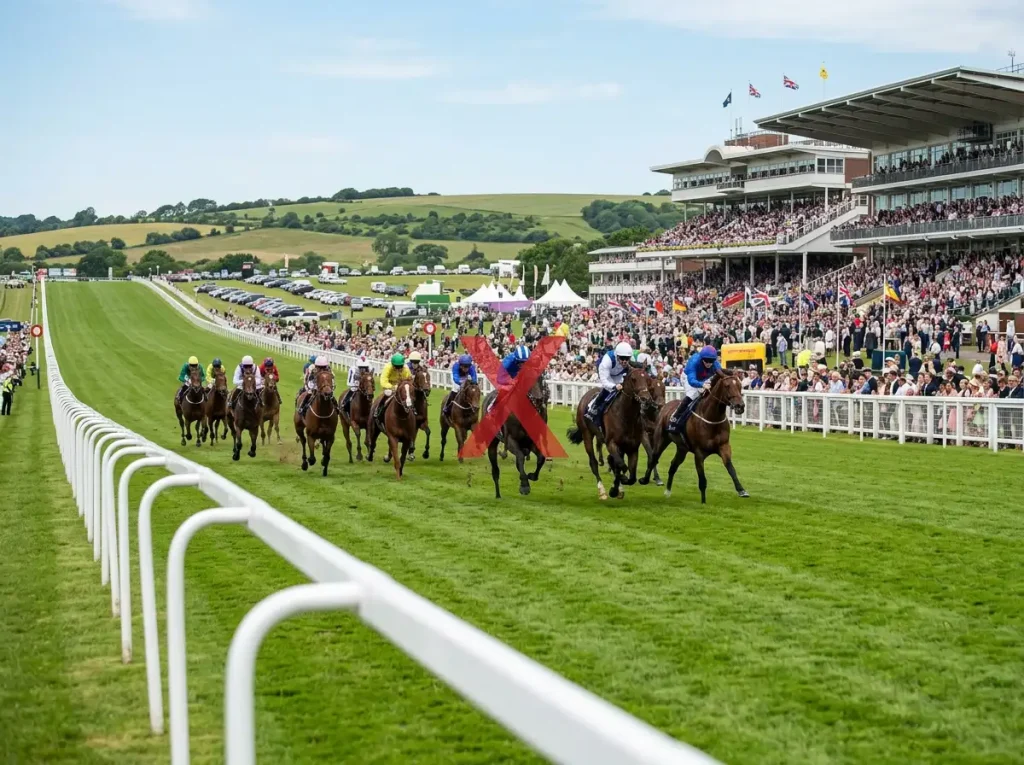
In 2025, Delacroix went off as the market leader for the Derby and finished ninth. The year before, the favourite was beaten too. And the year before that. Only three of the last ten Derby favourites have actually won the race, which means seven out of ten times the market leader has failed to deliver. That statistic alone should make every serious punter at least consider a market specifically designed for races where the favourite is unreliable: the “without the favourite” bet.
This is a market I come back to every Derby year, and the logic behind it is as straightforward as betting gets. You are wagering on which horse finishes first, excluding the favourite from the equation entirely. If the favourite wins, your bet is settled on whichever horse finishes second. If the favourite does not win, the result stands as it happened on the track. It is a simple concept with surprisingly deep tactical implications.
See also: epsom derby betting and explore non-favourite betting angles.
What “Without” Means in Practice and How Prices Are Set
The “without” market removes the favourite and recalculates the odds on every remaining runner. Because the shortest-priced horse is taken out, the prices on everyone else compress. A horse priced at 10/1 in the outright market might be available at 6/1 or 7/1 in the “without” market, reflecting its improved chance once the favourite is removed from the field.
Bookmakers set these prices by redistributing the favourite’s implied probability across the remaining runners, then adding their own margin. The process is not perfectly proportional – runners considered most likely to benefit from the favourite’s absence tend to be shortened more aggressively. If the favourite is a front-runner and there is another prominent pace-setter in the field, that rival’s “without” price may shorten more than a hold-up horse who was never directly competing with the favourite for the lead.
One detail worth noting: the “favourite” in this market is defined at a specific point. Some bookmakers use the starting price favourite, others the morning favourite, and a few use the ante-post favourite as defined when the market opens. This distinction matters when two or three horses are trading at similar prices. If joint favourites exist, most operators void the “without” market entirely or apply special rules – check the terms before placing the bet.
Why the Derby’s Favourite Failure Rate Makes This Market Appealing
Every race has a favourite, and in most Group 1 contests the market leader obliges around 40% of the time. The Derby underperforms that benchmark significantly. A 30% strike rate for favourites across the past decade might sound like a minor shortfall, but the practical impact is enormous: it means you are paying a premium for the shortest-priced runner in a race where that premium is not justified by results.
Wayne Lordan, who won the 2025 Derby aboard Lambourn at 13/2, captured the nature of the race perfectly when he described how his horse “had plenty left” as they turned into the straight. The Derby is a stamina test, a test of temperament, and a test of how a horse handles Epsom’s unique undulations. Market confidence, built on spring trial form and pedigree reputation, frequently evaporates over the final two furlongs. The “without” market lets you sidestep that volatility entirely. You are no longer betting against the possibility that the favourite lands a career-best performance – you are betting on the relative merits of every other horse in the field.
I find this especially useful in years when the favourite is trained by a dominant stable with multiple entries. The market often compresses around a single stable selection, leaving other trainers’ runners at inflated prices both outright and in the “without” market. Those are the years when the “without” bet pays its way most reliably.
Combining “Without” with Each-Way for Extra Protection
The “without” market is available each-way at most major bookmakers, and this is where it becomes particularly interesting. If you take an each-way “without” bet, you are covering a win and a place finish for your selection – but with the favourite removed from the settlement. If the favourite finishes second and your horse finishes third, your “without” place bet is settled as if your horse finished second.
The effective place terms in a “without” market are usually the same as the outright race – four or five places on the Derby – but with one fewer horse competing for those positions. This shifts the probability in your favour, subtly but meaningfully. Combining the compressed “without” win price with the improved place probability creates a bet that is, in my experience, one of the sharpest approaches to the Derby each-way puzzle.
There is a staking consideration too. Because the “without” price is shorter than the outright price, you need a slightly larger stake to target the same return. Calibrate your stake to what the “without” odds offer, not what the outright odds suggest. A deeper look at how to assess Derby odds across different bookmakers will help you find the best available “without” prices on the day.
Limitations: Liquidity, Timing and When to Avoid
“Without” markets are not available at every bookmaker, and where they are available, they tend to open closer to race day rather than in the ante-post phase. Liquidity can be thin, especially on exchanges where the “without” pool attracts less money than the outright market. If you want a substantial stake, you may need to shop around or accept a slightly shorter price.
See also: Derby Rule 4 Deductions for practical tips and examples.
There are also scenarios where the “without” bet loses its edge. When the favourite is genuinely outstanding and trading at odds-on, removing it from the equation actually makes the race more open and harder to predict – the very quality you were trying to escape. If the favourite is a short-price standout, the “without” market can resemble a competitive handicap where separating the remaining runners is no easier than picking the outright winner in a normal year.
The sweet spot for “without” betting is a Derby where the favourite is a warm favourite – say 3/1 to 7/2 – rather than a dominant one. At those odds, the market is acknowledging clear doubts, but the favourite is still absorbing enough of the market’s confidence to create value in the “without” prices for the rest of the field. In those conditions, this market is one of the most elegant tools available to a Derby punter.
